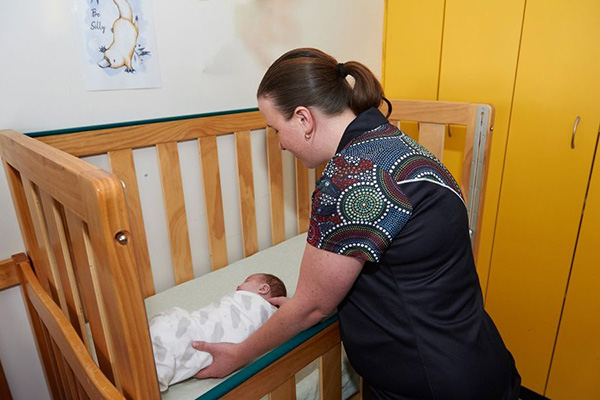
 Sleep and rest are essential for children's health, wellbeing and development. Providing safe sleep environments means not only meeting legislative requirements, but also ensuring practices respond to each child's individual needs.
When reviewing sleep and rest arrangements, approved providers and services should consider whether their environments, equipment and practices support safe, consistent and responsive care for every child. This includes having sufficient cots available for infants and children who developmentally require them, as well as carefully considering the use of white noise machines.
Sufficient cots to meet children’s individual needs
Under
regulation 105 of the Education and Care Services National Regulations, approved providers must ensure
each child has access to
sufficient furniture, materials and developmentally appropriate equipment suitable for the education and care of that child.
The rotational use of cots, where one child uses a cot and then another child uses the same cot on the same day, does not demonstrate compliance with regulation 105, regardless of whether bedding is changed between uses.
To comply with regulation 105, the Regulatory Authority expects a 1:1 cot ratio for children under 12 months, and for older children who have not yet transitioned out of a cot based on their individual developmental needs. This means a cot is provided for each child’s dedicated use to meet the needs of
that child.
The
Guide to the National Quality Framework supports this position, advising that when authorised officers assess sufficiency of furniture, materials and equipment, they consider whether there are enough cots or other appropriate bedding to cater for young children attending the service.
This expectation also aligns with guidance from
Red Nose (PDF, 420KB), which advises that children should transition from a cot when they begin attempting to climb out and appear capable of doing so successfully. As the guidance says, ‘this commonly occurs between 2 and 3½ years of age, although it may occur as early as 18 months’. Services should therefore consider each child's individual developmental needs when determining whether a cot remains the most appropriate sleep and rest option.
While infant sleep and rest routines may have some predictability, children's individual needs cannot always be anticipated and their best interests must remain the paramount consideration. Having a dedicated cot available whenever a child requires sleep or rest provides a safe and consistent sleep space, supported by educators who understand and respond to that child's individual needs.
Approved providers should also ensure enrolment practices and sleep room capacity support sufficient dedicated cots for all children in a group who are under 12 months of age or who developmentally require a cot. The capacity of the sleep room must also allow for educator movement between cots, children not to be able to touch each other in adjacent cots, and all sleeping children to be adequately supervised from the adjoining activity room.
White noise machines: consider children’s hearing
White noise machines are often used with good intentions to help children settle and reduce background noise, but have you considered their impact on children’s hearing?
Research suggests that some white noise machines can reach sound levels that are too high for infants, particularly when used at higher volumes and close to the cot or bed.
If white noise machines or apps are used, services should support their safe use:
- Keep the volume as low as possible—the risk from noise increases with higher sound levels.
- It’s good practice to position the device at least 1 metre away from every child.
- Use only for as long as needed and turn it off when no longer required (e.g. when a child falls asleep)—both the loudness and the length of exposure contribute to noise-related risk.
These are also valuable conversations to have with families, particularly as children may be exposed to longer periods of white noise during their overnight sleep.
Resources supporting safe sleep and rest practices
Regularly reviewing sleep and rest environments, assessing the risks and implementing robust policies and procedures helps ensure they continue to meet children's individual needs while supporting compliance with legislative requirements.
A range of resources is available to support services and educators:
Key legislative requirements for sleep and rest
Approved providers are responsible for ensuring their service’s sleep and rest policies, procedures and practices align with relevant legislative provisions, including:
By maintaining safe, responsive and well-planned sleep environments, services can support children's wellbeing while ensuring their sleep and rest practices remain aligned with the legislation and best practice.